Preparing for the Sake Scholar Course
Names, names, names and more names
My journey into sake started with a book, Exploring the World of Japanese Craft Sake: Rice, Water, Earth. I remember clearly being so absorbed by it in December of 2024. A few weeks later, I had finished it, read interviews, watched videos, and listened to podcasts featuring both authors, Nancy Matsumoto and Michael Tremblay. By early January, I arranged my first visit to a brewery close to Wazuka and met one of the brewers from Iga featured in the book. The always-smiling Rumiko-san from Moriki Shuzo.
At first, I never thought I would ever get into sake. Personally, I have never enjoyed any type of alcoholic beverage. But something struck all the right frequencies in me while reading the book and later talking extensively with Rumiko-san. Perhaps working as a tea farmer, as well as being obsessed with food regionality and rice cultivation, made me see something more than a drink. A brewed mix of culture, microbes, human elements, and craftsmanship. Since then, I haven’t stopped for a moment learning the different facets of sake, not only the drink, but all the other components that assemble this cultural artefact. With time, I thought I would like to see what Michael has on his hands with the Sake Scholar Course. A course not only on sake but also regions, geography, food, rice strains, and more? It just felt like such a far-away objective, while at the same time, such an obvious path forward. One not found in education programs.
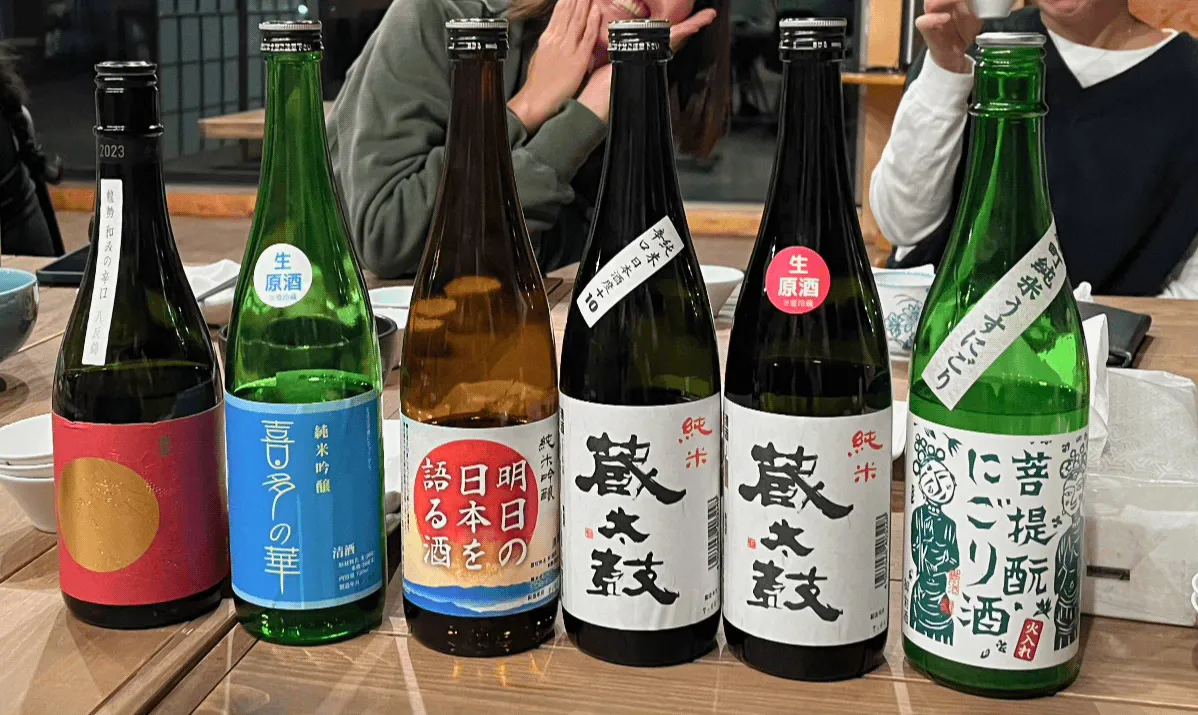
A selection of sake bottles from a tasting we did at work.
It certainly isn’t easy to make or study a course at that level. There’s a need for prerequisites in courses like this, and while I believe anyone can get to a good level of understanding needed for the course, not everyone can get there on their own by learning and investing time, or get the certification route by taking courses either. The Sake Scholar Course is an advanced level of education, deep and wide, going through the different prefectures of Japan, weaving through their character and diversity in an attempt to define what sake regionality is or might be.
Gearing up for class
So, here I go, heading right into it this next January. While I’m unable to attend the in-person class, attending online from Japan will hopefully sort of compensate for the in-person factor, at least a bit. Before joining the course, I already had a considerable amount of notes from other courses, my own research, and multiple hours of sake podcasts and conversations with people from the industry in my preferred note-taking system, Obsidian. None of that prepared me to tackle the massive textbook that arrived at my doorstep a few days ago. While I have, obviously, not read it front to back yet, I can see the amount of information is wide and deep, aided by a myriad of graphics, maps, and other iconography that really help retain the staggering amount of information in it.

The Sake Scholar textbook
This is a type of course that you cannot complete by just reading the book and attending class. There are names of old provinces, mountains, yeast numbers, additional names, food names, river names, names, names, and more names. It’s quite a lot, so let’s enter the wonderful world of note-taking and flashcards in an attempt to not lose sanity on this endeavour.
Preparing your notes
While I’m a huge stationery hoarder, digital notes have many advantages over hand-written ones in some cases. In this particular case, being able to refine, expand, and start notes from previous learning material is an invaluable starting point. You’re expected to have a certain amount of knowledge and experience to jump into the course, so having prepared thorough notes beforehand will give you a big head start, in particular if you plan on taking the course in person, which feels like a version of an Ironman marathon compressed into just a sprint with a final boss fight at the end.
Not all notes need to be extensive, but with so many information points spread throughout the book, it’s definitely useful to have, for example, a compiled note that gathers all the topics from a certain prefecture. Here’s just an example of some key points for a single prefecture I’ve gathered after flipping through the book, expanding some previous points:
- Main areas, districts, and main geological features
- Climate
- Water characteristics and bodies
- Locally developed rice strains
- Main rice strains cultivated
- Locally developed yeast strains
- Main sake style preferences
- Local Toji guilds
- Geographical Indications
- History
- Common characteristics
- Local Food Specialties
- Breweries and case studies
Of course, remembering all this data × 47 prefectures is a big undertaking. While this is a big time investment, it will hopefully pay off by offering a single source of truth for much of the information on these topics and providing a jumping point to other topics. For example, information on Gohyakumangoku rice cultivar, developed in Niigata Prefecture, should ideally live in two places. Once on its own note and to some extent in the Niigata Prefecture note as well. That’s when Obsidian or similar note-taking systems come in handy, providing a great way to “link” notes together and navigate through them effortlessly. Even recently, Apple Notes has implemented similar features, so if you have notes on your phone about bottles you liked before or other things about sake and life in general, you can easily start capturing that knowledge right away.
Priming the brain
Until here, we’ve exposed the obvious: captured the important information bits in the book, made note of them, expanded or summarised as needed. Then we need a way to actually remember them, whether it’s to feel confident walking into class, being able to recall the important bits, or just to feel secure you can recall all those names during the final exam. I was absolutely not a fan of flashcards for these things, but they’ve proved useful over and over again. Although I would like to add that I still find the old style of handwritten flashcards not working for me. While the handwriting part of it definitely works, helping retain some information, carrying the cards around and then statistically never ever seeing one of the cards unless you go through all of them still makes me not a fan of this system.
Here is where Spaced Repetition Systems (SRS) like Anki come into play. Dump your information bits, and let the system show you the right amount of cards you can absorb in a day and make sure you keep seeing them at different intervals depending on your level of confidence in recalling the facts, names, and other data points.
It does take a considerable time to create those card decks; fortunately, you can find some already done and shared by previous SSC students and work from there. I started with a pretty extensive existing one and downsized it to my preferences, changed the phrasing and amount of cards to something that’s easier for me to recall.
We all learn differently
While this is certainly not doable for everyone, this is what helps me prepare for my studies in other fields, like Japanese language. What is the best way for you to learn new topics and expand your education? I’m looking forward to learning other ways to assimilate complex information and sharing it with others. I was inspired by Katia Loves Wine and her videos sharing how she’s navigating the behemoth that is the WSET Level 4 for wine. I’ll be sharing my, considerably shorter, learning experience with the SSC here as the months progress.