Tokyo Sake Challenge 2025
Tokyo Sake Challenge ever. The event brought together around 120 submissions of products from breweries across the country and some international ones. While I did not count them, there were lots of them. I believe someone else actually counted them just for fun. The event was organized by educator and kurabito Guilia from Jijisake and Sake sommelier and doburoku ambassador Cindy Bliss from Sake Nomad.
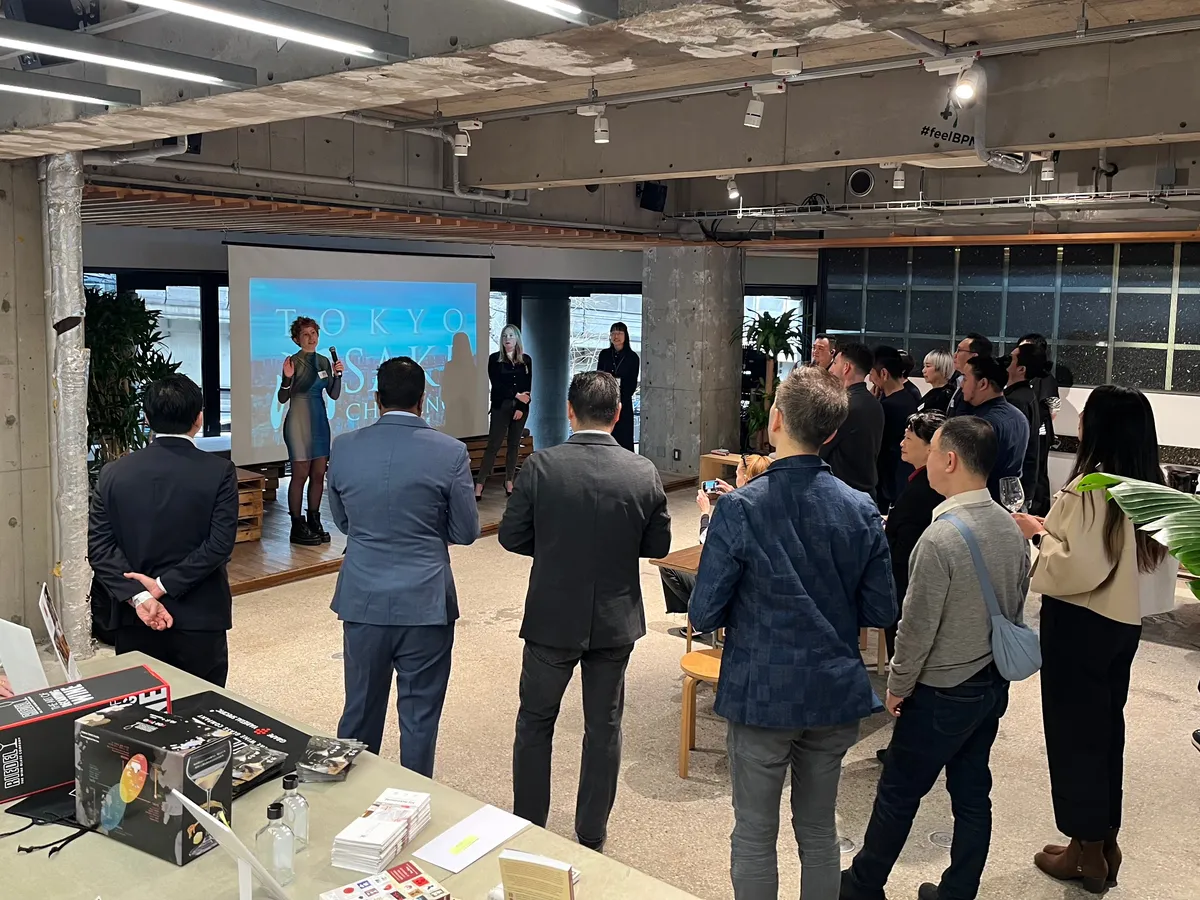
Opening words for the Tokyo Sake Challenge
The Sake Challenge aims to promote sake as an international drink. While some of these events happen overseas in Milan, London, and Singapore, to mention a few, this is the first time in Japan. One of the main activities of the Sake Challenge is the fact the brewers will receive feedback on their submitted sake. With judging panels comprised of different nationalities and backgrounds, the evaluation can deliver a more diverse picture of how sake is appreciated internationally with, for example, regional cuisine. While this makes more sense in a local market like in the other Sake Challenges around the globe, this one is unique as it is an opportunity to gauge the intentional appeal at the birthplace of sake. I saw many industry people assisting, and while serving to some attendants in the afternoon, a Kuramoto, a president or owner of a brewery, made sure to talk to me a another volunteer there to let us know which sake was his and to pour him a glass of it after introducing himself.
A set of about 18 judges in teams of 3 or 4 evaluated blindly all the submissions. All sake was split into different groups of bottles, with three rounds of tasting, which mainly separated the sake by type. While daigingo/gingo sake made up a big chunk of the submissions to the competition, there was also junmai, a bottle of honjozo, multiple bottles of doburoku, other craft sake bottles, koshu etc. Including a selection of sparkling and sake brewed abroad, from New Zealand, United States, Vietnam, Singapore etc.
It was interesting to be next to a group of judges and listen to how they evaluated each bottle. The ebb and flow of their evaluation also showed in their enthusiasm, feedback for the breweries, and possible pairings.
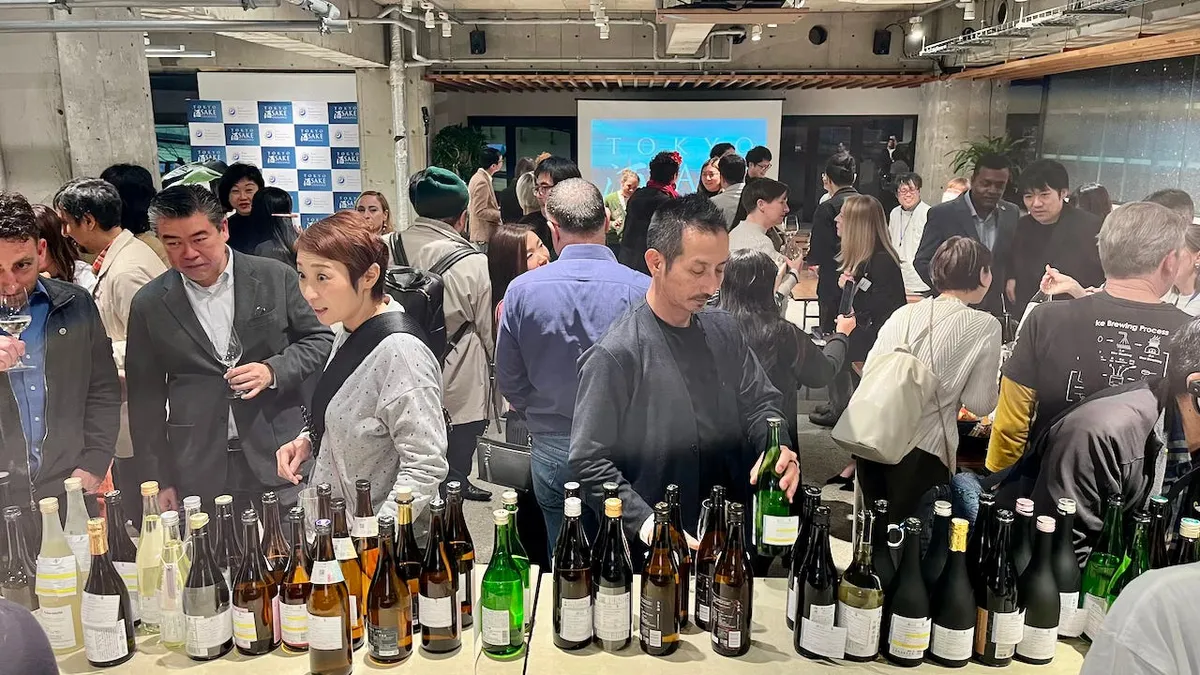
The event floor during the afternoon time, viewed from the serving side.
The event floor during the afternoon time, viewed from the serving side. By the end of the event, volunteers went to find the bottles the judge appraised more while cleaning up. The judges did not know what they were trying, but we kept notes on the ID tag of each sake to cross-check ourselves later on with the list we used to bag each bottle into a black cloth for service. I discovered many new breweries, enjoyed some incredible sake and learned a lot from the judges and other participants. Now, I would like to share a short list of the ones I liked the most.
- Raku no Yo, yamahai junmai muroka from Marui Brewery. While yamahai is an acquired taste, I found an absolutelygreat fit for my preferences. Wild, bold, creamy, just enough sweetness to wrap it up at the end. Probably my favourite of the event. (See Tenbi below)
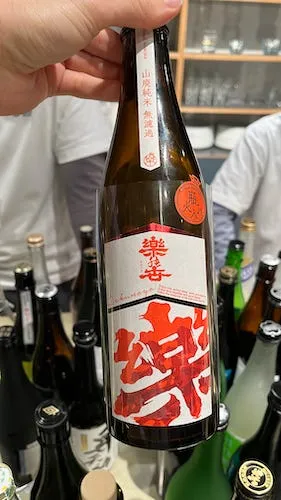
Raku no yo, yamahai junmai muroka from Marui Brewery
- Tenbi, Tokubetsu Junmai Karaten from Choshu Sake Brewery. This one went completely off the radar until we started serving them in the afternoon, at least to me. When I actually unwrapped it, I thought, such a cool label! In fact, it is so nicely designed. This brewery had 4 sakes submitted, and let me tell you, they look great next to each other. I tried the dry one, it was clean, smooth, and so refreshing. A very opposed version of everything that Raku no Yo is, but they work pretty well together, at least from my beginner appreciation. Fighting for the favourite sake of the day with Raku no Yo.
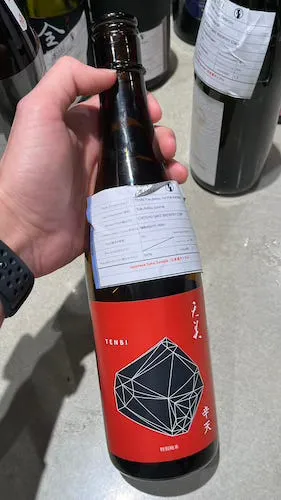
Tenbi, Tokubetsu Junmai Karaten from Choshu Sake Brewery.
- Moekoi, Junmai Ginjo from Niizawa Sake Brewery. Obviously, I got drawn to this bottle because of its thick pink colour. That said, the judges were also surprised by how good it tasted, considering the thick aspect it has in the bottle. To me, it tasted a bit like strawberry-flavoured yoghurt, with a relatively clean aftertaste and not so much interference from the nigori character of the sake, at least not to me. It is a fun seasonal twist that is actually good! If you are wondering how they achieve the colour, the yeast used gives off this colour (as I told once to a friend, it poops red colour). There is a red strain of yeast that derives from Association Yeast nº10, but not sure if that is the one being used here.
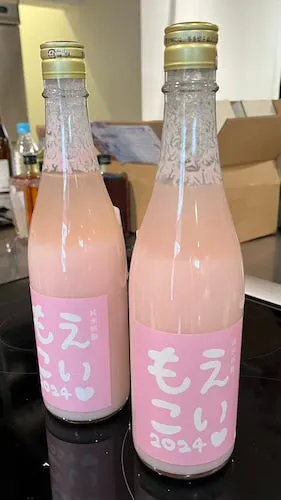
Moekoi, Junmai Ginjo from Niizawa Sake Brewery.
- Tetsu, Junmai Daiginjo from Azumanofumoto Sake Brewery. A clear favourite of many people who tried it during and after the event. Clean, fruity, aromatic and also apples? So complex, perhaps a bit far ahead from my current understanding of sake, but delicious! This one made me realize that a few of the sakes I liked from the event had something in common. That is the use of the Aiyama (愛山) rice cultivar. While that alone isn't enough to determine the final sake, it seems to be a common thread in my preferences. I have tried some sake that uses the same cultivar before and really enjoyed it.
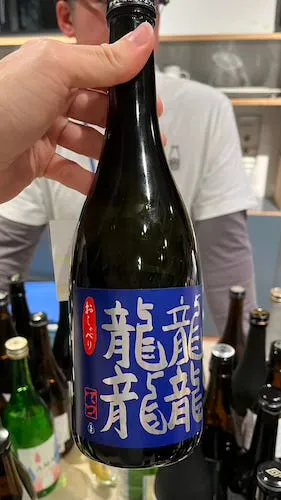
Tetsu, Junmai Daiginjo from Azumanofumoto Sake Brewery.
- Hanabusa, Kimoto Junmai Daiginjo, from Moriki Brewery. Last but not least, this was another excellent sake from a brewery I visited around one year ago, in January/February of 2024. Rumiko-san is an incredible woman, the head of Morishiki Shuzo in Iga, Mie Prefecture. This Kimoto has also been aged for around 2-3 years now. Its label has a beautifully one-of-a-kind washi paper label glued on each bottle. The rice is 100% pesticide-free and grown by themselves. For this sake, they allow the yeast to naturally enter their Kimoto. Showing the care, love and craftsmanship behind their work. Her work made me discover and fall in love with sake. This Hanabusa is truly amazing. I am glad I could pour it and talk about it with others at the event.
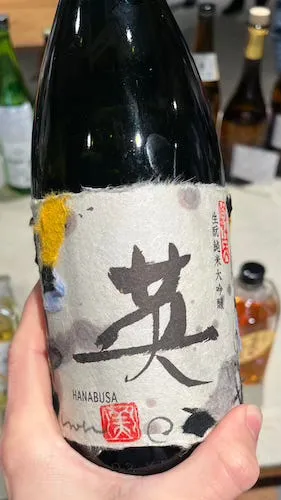
Hanabusa, Kimoto Junmai Daiginjo, from Moriki Brewery.